


Destination Cuba

Destination Cuba: A Piece of Caribbean Romance
Cuba is an island country in the Caribbean, consisting of the main island of Cuba, the Isla de la Juventud, and several smaller islands and archipelagos. Cuba has a rich and diverse history, culture, and nature, shaped by the indigenous peoples, Spanish colonization, the struggle for independence, the 1959 Revolution, the socialist system, and the influence of the USA.
History of Cuba
The first inhabitants of Cuba were the Guanahatabey and the Taíno, who arrived from South America around 4000 years ago. They lived in small villages and sustained themselves through agriculture, fishing, and hunting. They had an animistic religion that venerated nature, and an oral tradition that passed down their myths and legends. The Taíno called their island Cuba, which means "great land."

The Spanish discovery and conquest of Cuba began in 1492 when Christopher Columbus landed in the Bay of Bariay during his first voyage. He claimed the island for the Spanish Crown and named it Juana, in honor of the Spanish prince. The Spanish established the first settlement in Baracoa in 1511 and soon after founded Havana, Santiago de Cuba, and other cities.
Cuba was an important colony for Spain, as it served as a strategic base for trade and defense in the Caribbean. It was also the scene of several conflicts between Spain and other European powers, such as England, France, and the Netherlands, who attempted to conquer or plunder the island. Cuba was also involved in the independence movements in Latin America, led by Simón Bolívar and José de San Martín. Some Cubans supported the liberation struggles, while others remained loyal to Spain.
The first Republic of Cuba was a constitutional democracy from 1902 to 1959, though it was plagued by political instability, social inequality, corruption, and foreign intervention. The US retained the right to intervene in Cuban affairs and maintained a naval base in Guantánamo.
The 1959 Revolution was the culmination of Cuban resistance against the Batista dictatorship. It was led by Fidel Castro, who in 1953 carried out a failed attack on the Moncada Barracks in Santiago de Cuba. He was arrested, convicted, and exiled, from where he returned with his brother Raúl and the Argentinian doctor Ernesto “Che” Guevara to establish a guerrilla movement in the Sierra Maestra. They gained popular support and waged a successful fight against Batista's army, which fled on January 1, 1959. Castro was appointed Prime Minister and began to implement radical reforms, such as nationalization of industry, land distribution, literacy campaigns, healthcare, and education.
Even today, Cuba still has many problems to solve. Nevertheless, it is a very beautiful country with friendly people! Cuba is a country you should definitely visit!
Pictures from Cuba:


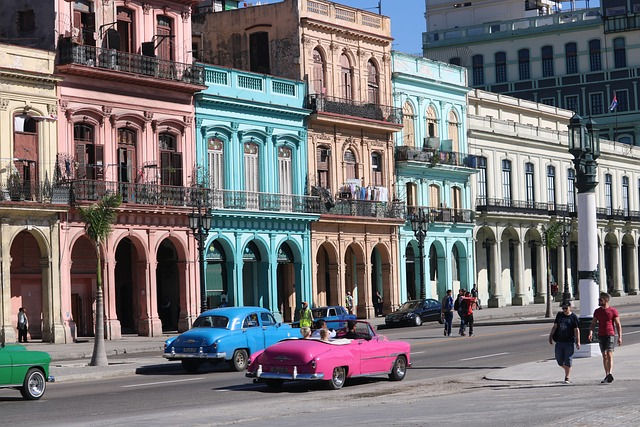

The best time to travel to Cuba – enjoy sun, beach, and culture
The best time to travel to Cuba depends on your personal preferences and your destination. Generally, the dry season from November to April is considered the most pleasant time to visit the island. During this time, the weather is warm, sunny, and dry, with an average temperature of 28°C (about 82°F) and low humidity. The dry season is also ideal for city trips, beach vacations, and diving excursions. However, this is also the most popular and expensive time to travel to Cuba, so you should book early and be prepared for more tourists. The rainy season from May to October is an alternative for travelers who are flexible and want to save money. During this time, the weather is hotter, more humid, and rainier, with an average temperature of 31°C (about 88°F) and high humidity. However, the rainy season does not mean it rains constantly. It usually consists of short and heavy showers that occur in the afternoon or evening. Afterward, the sky clears up and the sun shines again. The rainy season is also a good time to experience Cuba's nature and culture. The landscape is greener, the waterfalls are fuller, and the fruits are riper. Additionally, there are many festivals and events during this time that showcase the Cuban zest for life. However, the rainy season also has some disadvantages. Firstly, there is a risk of tropical storms and hurricanes, which can occur from June to November. These can lead to strong winds, floods, landslides, and power outages. Secondly, the roads and paths can be damaged or impassable due to the rain, which makes getting around difficult. Furthermore, some sights or activities may be closed or restricted, such as cave tours or boat trips. Therefore, the best time to travel to Cuba depends on your personal preferences and your destination. If you value good weather, little rain, and plenty of sunshine, then the dry season from November to April is the best choice for you. However, if you are flexible, want to save money, and want to experience Cuba's nature and culture, then you can also have a great time on the island during the rainy season from May to October. No matter when you decide to visit Cuba, you will certainly be impressed by the beauty, charm, and diversity of the island.
Here you'll find everything about the best time to travel to Cuba!

Einreise nach Kuba: Was Sie wissen müssen
Cuba, the Pearl of the Caribbean, attracts more and more travelers with its dreamlike beaches, vibrant culture, and rich history. However, before you embark on your trip, you should inform yourself about the entry requirements.
Important documents for Cuba
-
Valid Passport: Your passport must be valid for at least six months beyond your entry date.
-
Tourist Card: This serves as your visa and must be obtained in advance. You can usually purchase it from your travel agency or the Cuban Embassy.
-
Health Insurance: Travel health insurance that includes Cuba is mandatory. Ensure that it covers medical emergencies.
Health requirements for Cuba
-
Health Form: Before entering the country, you must complete a health form online.
-
Vaccinations: There are no mandatory vaccinations for entry into Cuba. However, standard vaccinations such as tetanus, diphtheria, and hepatitis A are recommended.
Entry requirements for Cuba
-
Duration of Stay: Generally, a stay of up to 30 days is permitted. An extension for an additional 30 days is possible under certain conditions.
-
Currency (Foreign Exchange): The import and export of Cuban Pesos (CUP) is prohibited. However, you may carry US Dollars or Euros.
-
Customs Regulations: Inform yourself in advance about the current customs regulations to avoid problems upon entry.
Current information for Cuba
Entry regulations can change at short notice. Therefore, be sure to check the website of the Federal Foreign Office or your travel agency for the most up-to-date regulations shortly before your trip.

Arrival in Cuba: How to Get to the Caribbean Pearl
Traveling to Cuba is quite easy thanks to numerous flight connections. However, there are some specific things to keep in mind that can simplify your travel planning.
Flight connections to Cuba
Most travelers choose flying as their mode of transport to get to Cuba. Numerous airlines offer direct flights or flights with one stopover. Popular departure airports in Germany include Frankfurt, Munich, and Düsseldorf.
Tips for Booking Flights:
-
Book early: Especially during peak season, flights book up quickly and prices rise.
-
Compare prices: Use comparison portals to find the best deal. (You can find a travel calculator at the bottom of this page!)
-
Be flexible: Flights on different days or at different times are often cheaper.

Crime in Cuba
Cuba is considered a relatively safe travel destination compared to many other Latin American countries. Nevertheless, it's important to stay informed about the current security situation and take some precautions.
You can find information about crime in Cuba HERE!
Conclusion: Travel Destination Cuba
Cuba is a fascinating travel destination with so much to offer. Cuba is an island full of history, culture, nature, and zest for life. Cuba is a land of contrasts, between the old and the new, the rich and the poor, the socialist and the capitalist. Cuba is a country undergoing change, between isolation and opening up, between tradition and modernity, between revolution and reform. Cuba is a country you have to experience to understand. Cuba is a country that stays with you.
More reports on travel destinations in Cuba to follow!
Destinations in Cuba
Destinations found:
5

Reiseziel Santiago de Cuba
Hier erfahrt ihr mehr über das Reiseziel Santiago de Cuba. Aktivitäten und Sehenswürdigkeiten für euren Urlaub in Santiago de Cuba.

Reiseziel Havanna
Hier erfahrt ihr mehr über das Reiseziel Havanna auf Kuba. Aktivitäten und Sehenswürdigkeiten für euren Urlaub in Havanna, Kuba.

Reiseziel Varadero
Hier erfahrt ihr mehr über das Reiseziel Varadero auf Kuba. Aktivitäten und Sehenswürdigkeiten für euren Urlaub in Varadero, Kuba.

Reiseziel Baracoa
Hier erfahrt ihr mehr über das Reiseziel Baracoa auf Kuba. Aktivitäten und Sehenswürdigkeiten für euren Urlaub in Baracoa, Kuba.

Reiseziel Cienfuegos
Hier erfahrt ihr mehr über das Reiseziel Cienfuegos auf Kuba. Aktivitäten und Sehenswürdigkeiten für euren Urlaub in Cienfuegos, Kuba.